
Choosing between clear aligners vs braces comes down to your lifestyle, your smile goals, and the specifics of your bite. Both options straighten teeth beautifully, but they work differently and fit different people. At Kraus Orthodontics, Dr. Collin Kraus, a board-certified expert, helps you weigh the trade-offs so you land on the right option for your smile.
What Are Clear Aligners and Braces?
Clear aligners are removable, custom-made clear trays that gradually shift your teeth into place, while braces are fixed brackets and wires bonded to your teeth that apply steady pressure over time. Both correct crowding, spacing, and bite issues. The right choice depends on your case, your habits, and how you want treatment to fit your day.
Every option should be planned and supervised by a board-certified expert like Dr. Kraus, who reviews your scans and goals before recommending a path.
What Are Clear Aligners?
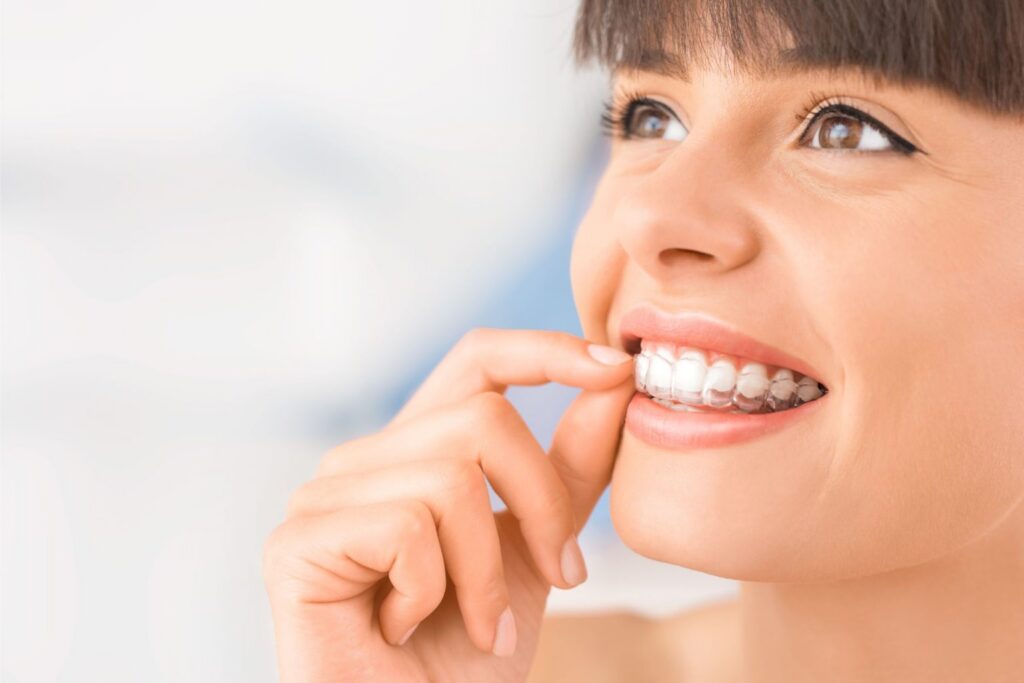
Spark clear aligners, a nearly invisible aligner brand, are made of smooth plastic. You wear each tray for one to two weeks, then swap it for the next in your series. Because they pop in and out, you can eat, brush, and floss like normal.
Each set is designed from digital scans of your teeth, so the fit is precise and the movements are mapped out from day one.
What Are Braces?
Braces use small brackets bonded to the front of your teeth, connected by an archwire. Gentle, consistent force guides your teeth into their new positions.
You have two main styles to pick from:
- Metal braces, durable, effective, and a favorite for kids and teens who want to add colorful ties at each visit.
- Clear braces, tooth-colored ceramic brackets that give you a more under-the-radar look while working just like metal braces.
Both aligners and braces can handle everything from small cosmetic tweaks to more involved bite corrections. The difference is really in how they get there and how they fit into your daily life. Dr. Kraus reviews your scans, X-rays, and goals to recommend the option best suited to your smile.
How Each Treatment Works
Clear aligners and braces both move teeth by applying steady, gentle pressure, but the delivery is very different. Aligners use a series of removable trays worn 20 to 22 hours a day, changed every one to two weeks. Braces stay on your teeth full time, with wires adjusted every few visits to guide your teeth toward their final position.
How Does the Clear Aligner Process Work?
Here’s what treatment with Spark clear aligners looks like from start to finish:
- Free consult and digital scans. Dr. Kraus takes 3D digital scans of your teeth (no goopy trays).
- Custom treatment plan. Your scans are used to design a series of aligners, each moving your teeth a small amount.
- Wear and swap. You wear each tray 20-22 hours a day and switch to the next set every one to two weeks.
- Check-ins. You visit us every several weeks, or check in remotely with the grin system, our remote monitoring option, so we can watch your progress without extra trips to the office.
- Retention. Once your teeth land in place, you’ll wear a retainer to keep them there.
How Does the Braces Process Work?
Braces follow a similar arc, with a few key differences:
- Free exam and planning. Dr. Kraus reviews your bite, takes digital scans, and maps out your custom treatment plan.
- Bonding day. Brackets are bonded to each tooth and connected by an archwire. Small elastic ties (or clear ties for clear braces) hold the wire in place.
- Adjustment visits. Every 4-8 weeks, we adjust or change the wire so your teeth keep moving.
- Elastics if needed. You may wear small rubber bands between your top and bottom braces to correct your bite.
- Removal and retention. Once your smile is where it should be, we remove the braces and fit you for a retainer.
Both paths are actively supervised by Dr. Kraus. The grin system lets us check on aligner or braces progress between visits, so you spend less time driving in and more time living your life.
Benefits of Clear Aligners vs Braces
Each option has real perks. Here’s how they stack up.
What Are the Benefits of Clear Aligners?
- Nearly invisible. Most people won’t notice you’re wearing them.
- Removable. Take them out to eat, brush, and floss.
- No food restrictions. Enjoy all your favorite meals without worry.
- Easy oral hygiene. Brushing and flossing feel normal, since there are no brackets or wires in the way.
- Fewer emergencies. No broken brackets or poking wires.
- Comfort. Smooth plastic edges are gentle on your cheeks and lips.
Because aligners come out for meals and cleaning, they’re a favorite for adults who want under-the-radar treatment and teens who play sports or instruments.
What Are the Benefits of Braces?
- No compliance required. They’re on your teeth 24/7, doing the work for you.
- Great for complex cases. Braces excel at big rotations, significant bite corrections, and moving multiple teeth in different directions at once.
- Predictable results for growing kids. For younger patients, brackets and wires give Dr. Kraus fine control as jaws develop.
- Clear braces option. If you love the reliability of braces but want a lower-profile look, clear braces blend in with your teeth.
What Is Daily Comfort Like With Each?
Aligners tend to feel snug for a day or two after each new tray, then settle in. Braces can feel tender for a few days after each adjustment. Neither option should stop you from living your normal life, and Dr. Kraus and the team at Kraus Orthodontics walk you through tips to stay comfortable at every step.
Clear Aligners vs Braces: Side-by-Side Comparison
Sometimes it helps to see the differences all at once. Here’s a quick look at how clear aligners and braces compare.
| Feature | Clear Aligners | Metal Braces | Clear Braces |
|---|---|---|---|
| Appearance | Nearly invisible | Visible metal brackets | Tooth-colored, more under-the-radar |
| Removable? | Yes, take out for meals and cleaning | No, stay on 24/7 | No, stay on 24/7 |
| Comfort | Smooth plastic, snug fit | Some tenderness after adjustments | Similar to metal braces |
| Compliance needed | High, must wear 20-22 hrs/day | Low, always working | Low, always working |
| Best for | Mild to moderate cases, disciplined wearers | All case types, including complex bites | Mild to moderate cases, image-conscious patients |
| Food restrictions | None (remove to eat) | Yes (no sticky/hard foods) | Yes (no sticky/hard foods) |
| Oral hygiene | Very easy | Requires extra care around brackets | Requires extra care around brackets |
| Visit frequency | Every several weeks (or remote via the grin system) | Every 4-8 weeks | Every 4-8 weeks |
| Typical treatment length | Case-dependent, often shorter for mild cases [STAT_NEEDED] | Case-dependent, often longer for complex bites [STAT_NEEDED] | Case-dependent, often longer for complex bites [STAT_NEEDED] |
How Does Each Fit Your Lifestyle?
If you can commit to wearing trays 20-22 hours a day, aligners give you real flexibility. If you’d rather “set it and forget it,” braces are a great fit. Neither is better overall, it’s about what fits you. Your timeline and comfort depend on your specific bite, and Dr. Kraus will give you a clearer estimate at your free consult so you know what to expect before you start.
Cost Factors: What to Budget for Your Smile
Wondering what clear aligners and braces cost? Prices depend on your case complexity, treatment length, and appliance type, and in most cases the two options land in a similar range. Rather than a flat sticker price, Kraus Orthodontics builds a custom treatment plan and quote after your free exam, so you see the real number before you commit.
What Affects Your Price?
- Case complexity. Simple crowding costs less than a full bite correction with elastics or extra appliances.
- Treatment length. Shorter cases usually cost less overall.
- Appliance type. Metal braces, clear braces, and Spark clear aligners each have different lab and material costs.
- Retainers and follow-up. Some plans include your first set of retainers.
What Ways Can You Make It Fit Your Budget?
Many families use a mix of tools to make orthodontics work for them:
- Dental insurance with orthodontic benefits
- HSA and FSA funds (orthodontics is typically an eligible expense)
- In-house payment plans to spread the cost across your treatment
Ask about your options at your free consult, and our team will walk you through the numbers with no hassle. Just straight answers and clear info, so you can decide without any surprise fees or pressure.
Who Is a Good Candidate for Each Option?
Almost anyone with healthy teeth and gums is a candidate for orthodontic treatment. The bigger question is which option fits best.
Who Is a Great Fit for Clear Aligners?
- Adults who want under-the-radar treatment for work or social reasons
- Teens who play sports, play instruments, or want fewer appliance emergencies
- Mild to moderate crowding, spacing, or bite issues
- Disciplined wearers who will keep trays in 20-22 hours a day
- Patients who value flexibility at mealtimes and easy brushing
Who Is a Great Fit for Braces?
- Complex bites with significant rotations or vertical movement
- Younger kids in Phase 1 or interceptive treatment, where jaw growth is a factor
- Patients who prefer a “set it and forget it” appliance
- Cases that need precise tooth-by-tooth control
Are There Smile Options for All Ages?
Kraus Orthodontics treats kids, teens, and adults. For younger patients, Dr. Kraus also evaluates airway concerns like mouth breathing or restless sleep, since jaw development and breathing patterns are connected. Airway-focused orthodontics can be part of a Phase 1 plan when it’s the right time to step in.
The only way to know for sure which option is right for you or your child is a professional evaluation. Dr. Kraus, a board-certified orthodontist, reviews your goals, your bite, and your lifestyle before making a recommendation.
Common Questions About Clear Aligners vs Braces
Which is faster, aligners or braces?
For mild to moderate cases, treatment times are often comparable. For very complex bite corrections, braces sometimes finish faster because they can move teeth in multiple directions at once. Dr. Kraus will give you a realistic timeline based on your specific case at your free consult.
Do aligners feel more comfortable than braces?
Both feel snug for a day or two when you start something new, whether it’s a new tray with aligners or an adjustment with braces. A lot of folks find aligners a bit gentler because there are no brackets or wires rubbing against the inside of your cheeks. Either way, tenderness is short-lived and manageable.
Can everyone use clear aligners?
Most people are candidates, but not everyone. Clear aligners work best when you’ll wear them 20-22 hours a day and when your case falls within what aligners can handle. Very complex bites, big rotations, or cases needing significant vertical movement may do better with braces. Dr. Kraus can tell you what’s realistic after a quick exam.
Are clear braces as effective as metal braces?
Yes. Clear braces work just like metal braces, same brackets, same wires, same results. The main difference is the material, which is tooth-colored ceramic instead of stainless steel. If you like the reliability of braces but want a more under-the-radar look, clear braces are a solid pick.
How do I decide which is right for me?
Start with a free consult. Dr. Kraus, our board-certified expert, will review your bite, take digital scans, and talk through your goals and lifestyle. From there, you’ll get a custom treatment plan with a clear recommendation, timeline, and cost. No pressure, just honest guidance from your hometown orthodontist.
Ready to see which option fits your smile best? We welcome neighbors of all ages for a free consult. Dr. Kraus and the team at Kraus Orthodontics will walk you through your options with hometown hospitality, so you can get your smile on with confidence.